

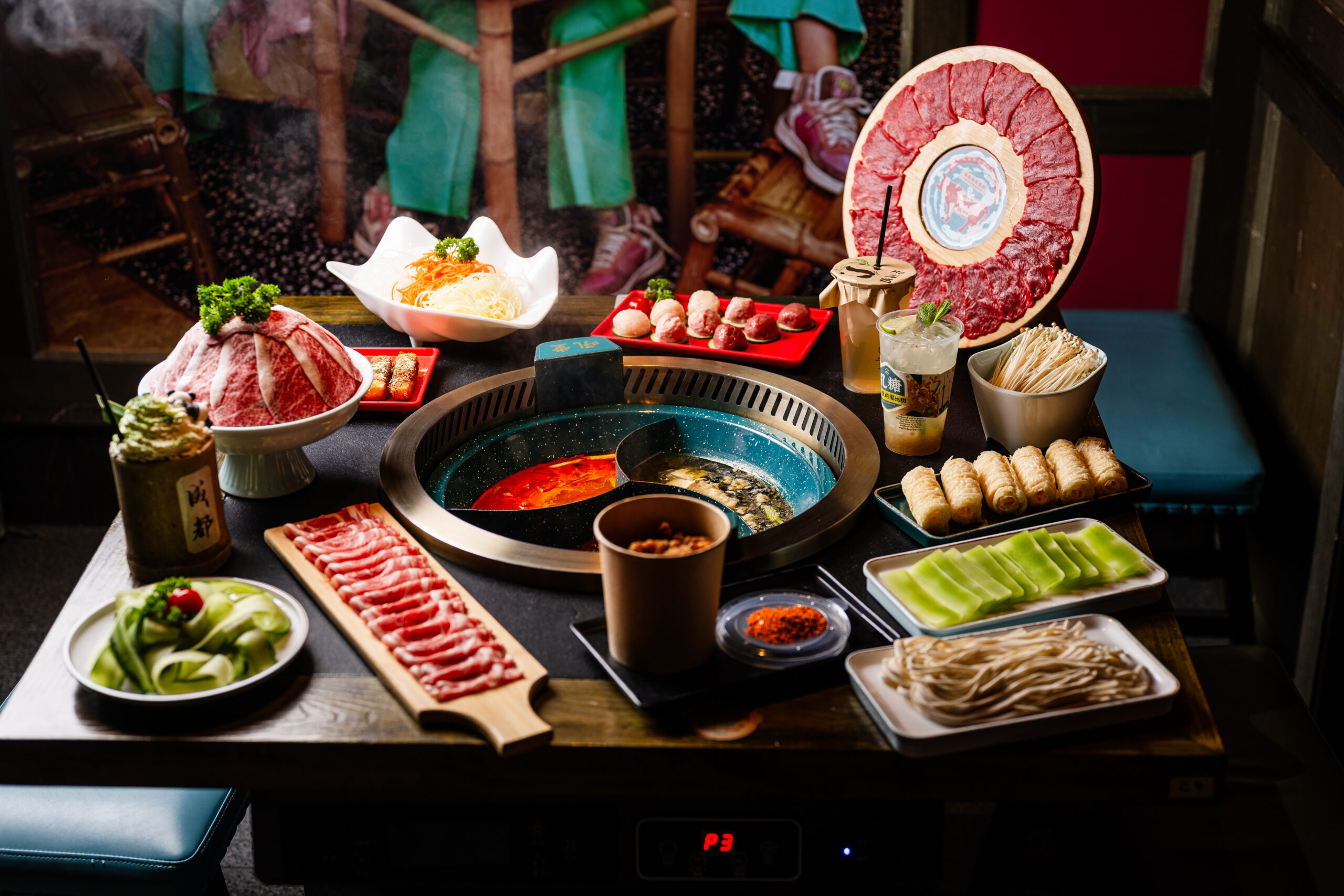
First up, hot pot is not just a dish. It’s a table setup, a tempo, a social contract. A pot of simmering broth sits in the middle, raw ingredients arrive on plates and the table cooks together, sharing from the same bubbling cauldron in real time. No chef hides in the kitchen while you eat. The table is the kitchen.
While hot pot can be cooked at home, it’s most commonly eaten in restaurants, where the equipment, broth options and sheer variety of ingredients transform a single meal into a shared event. In China, hot pot is what you eat when you want to linger. It’s for cold nights, big groups and reunions. In Berlin terms, think of it as somewhere between a fondue night and a dinner party, but louder, steamier and far more customisable.
Hot pot styles vary across China. Sichuan and Chongqing hot pot is famous for its deep red, chilli-heavy broth with Sichuan peppercorns that numb your lips – intense, addictive and not at all subtle. Cantonese hot pot, in contrast, features lighter, cleaner broths like chicken or herbal bases, where the focus is on the quality of the ingredients rather than spice. Northern styles often highlight lamb, sometimes cooked in copper pots, with simple broths and strong dipping sauces. In Berlin, hot pot restaurants often mix styles or adapt them for local tastes, and most places offer both a chilli-rich broth and a milder option so everyone at the table can enjoy what they like.

How To:
1. Choose your broth
The broth is the mood-setter. Everything else follows.
Spicy: Rich, oily and bold. Perfect if you love strong flavours and don’t mind a little sweat. Works especially well with beef, lamb, tofu and mushrooms.
Mild or clear: Chicken, pork bone or herbal bases. Ideal for seafood, leafy greens and anyone who wants to savour the natural taste of the ingredients.
Split pot (yuānyāng): One pot, two broths. You can mix and match flavours – spicy, mild or anything in between – making it a favourite at hot pot tables and perfect for groups with different tastes.

2. Make your sauce
If the broth is the foundation, the dipping sauce is the personality.
Most Chinese hot pot places offer a sauce bar. Don’t panic. Start simple. The goal isn’t to overpower the food, but to give each bite a little lift. Most Chinese diners have one or two dipping sauces they return to, each with their own go-to combination.
This is the most creative part of hot pot. There are no rules, no correct ratios and no two sauces are ever quite the same. It depends entirely on personal preference, mood and how spicy the pot has become.
Here’s what we usually go for:
Joyce:
Sesame paste + vinegar + garlic or 3-4 tablespoons of soy sauce + red chilli + chopped garlic + cilantro + drizzle of oil
Beisi:
3-4 tablespoons of sesame oil + garlic paste, a classic Chongqing hot pot dipping sauce or 2-3 tablespoons of sesame oil + garlic paste + chilli oil + green onion + cilantro + vinegar

3. Etiquette and cultural tips
Keep utensils separate. Use a dedicated sets of chopsticks for raw and cooked ingredients.
Boil first: Let the broth gently boil before adding anything.
Add gradually: Don’t overcrowd the pot. Add 1-2 ingredients at a time; thinly sliced meats cook in seconds, greens wilt fast and frozen ingredients take longer. Leaving ingredients in the broth too long dulls their texture and flavour. If you’re unsure, ask the staff or check the menu for recommended cooking times.
Cooking order: Start with meats, then other proteins and vegetables and finish with noodles. This keeps the broth clean and balanced and ensures every ingredient tastes the way it’s meant to.
Share and cook together: Hot pot is about sharing. Order for the table, cook together and make it a communal experience – everyone gets to enjoy the pot together.

4. Use the right vocab
Guōdǐ 锅底 – gwoh-dee: The base of the pot, meaning the broth you choose before anything else. This is the foundation of your hot pot and usually ordered first.
Málà 麻辣 – mah-lah: Classic Sichuan spicy and numbing flavour made with chilli and Sichuan peppercorn.
Qīngtāng 清汤 – ching-tahng: Clear or mild broth. Light, clean and ingredient-forward. Often used as the non-spicy half of a yuānyāng pot.
Yuānyāng Guō 鸳鸯锅 – ywen-yahng gwoh: Split pot with two broths in one pot, usually one spicy and one mild. Perfect if people at the table want different heat levels or if you want to balance bold flavours with something lighter.
Jiàngliào 酱料 – jyahng-lyao or Tiáoliào 调料 – tyao-lyao: Dipping sauces.
Lóu sháo 漏勺 – loh-shaoh: Large slotted ladle used to scoop, stir and retrieve ingredients from the hot pot, especially smaller items that might otherwise get lost in the broth.
Shuàn 涮 – shwahn: To swish or dip ingredients quickly in the broth.
Jiātāng 加汤 – jya-tahng: Broth refill. Staff will often ask halfway through the meal if you want to top up the broth, usually with clear soup. You can also ask anytime if the pot is getting low.

Where To:
Yan Huo
Yan Huo brings a fresh, modern take on hot pot by combining individual mini hot pots with a built-in barbecue grill. One detail we really loved: everyone gets their own hot pot, so there’s no need to negotiate spice levels or ingredients – you boil exactly what you want, when you want. We tried the Sichuan spicy broth and mushroom broth, and the staff also recommended the tom yum broth, which we’re saving for our next visit. The hot pot-barbecue combination works remarkably well. If you’re looking for a hot pot experience in Berlin that feels personal, flexible and contemporary, Yan Huo stands out as one of the city’s most exciting new spots.
- Yan Huo BBQ & Hot Pot, Kaiserdamm 89, Charlottenburg
Ting Song
This West Berlin restaurant offers an elegant, gallery-like dining experience. Such a vibe is quite unusual for hot pot, which is typically considered a down-to-earth style of dining. With a strong vegan focus, the restaurant stands out not only for its highly aesthetic interior, but also for its wide variety of fresh vegetables, thoughtfully prepared vegan broths and refined table service. The space feels both family-friendly and well suited for a date, making it an ideal choice for those seeking a stylish, plant-forward hot pot dinner and a chic yet relaxed night out.
- Ting Song, Eisenzahnstraße 14, Charlottenburg-Wilmersdorf
Hou Tang

The moment you step inside Hou Tang, the authentic interior brings you to old Sichuan: vibrant wall colours, traditional Chinese lanterns and intricate bamboo weavings, combined with the lively buzz of diners, provides an immersive dining experience. The broths are genuinely flavourful, ranging from mild to intensely spicy, and generous portions of fresh meat, fish and vegetables are served on beautifully presented plates. What truly sets Hou Tang apart is its extreme authenticity, making the experience strikingly close to dining in China itself.
- Hou Tang, Kurfürstendamm 175, Charlottenburg-Wilmersdorf
Ruyixuan
Ruyixuan is a practical option for those specifically looking for a buffet-style hot pot experience in Berlin. The restaurant offers a €27 all-you-can-eat hot pot buffet, including drinks, available during the lunch window from 12pm to 3pm. The buffet features over 70 hot pot ingredients, along with staples like dumplings, fried rice, Chinese snacks and ice cream. When it comes to broth, we recommend going for the Mala spicy base or the mushroom one, both rich and comforting. With spacious seating and private rooms that can host groups of 50 or more, Ruyixuan is a good choice for budget-friendly gatherings, group dinners or birthday celebrations.
- Ruyixuan, Plaza, Frankfurter Allee 73C, Friedrichshain
